

Asimina triloba
Pawpaw, Roomappel / Pawpaw
Annonaceae (zuurzakfamilie)
Edible plant part (1)
Fruits
Read 'form of consumption' for safe preparation methods
Toxic plant part (2)
Shoots (growing), leaves
Pawpaw belongs to the small trees-large shrubs in the food forest. In the process of ecological succession it is a mid and late species. The growth rate is slow. Fully grown the plant has an average height of 2.5 to 4.5 meter and a width of 1.5 to 2.5 meter.
The foliage (or leaf cover) is half-open. The Pawpaw is decidious. It buds in april and it loses its leaves in november.
This species forms a taproot deep root system. This species is non spreading in the food forest.
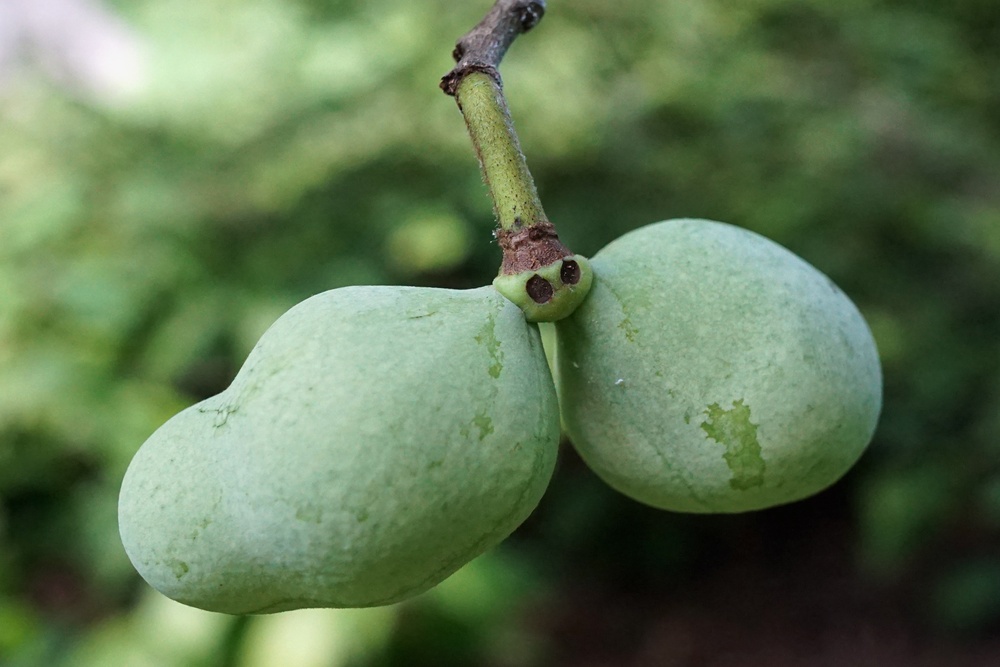 foto: Plant Image Library, https://www.flickr.com/photos/138014579@N08/35675927880
foto: Plant Image Library, https://www.flickr.com/photos/138014579@N08/35675927880
foto: Plant Image Library, https://www.flickr.com/photos/138014579@N08/35675927880
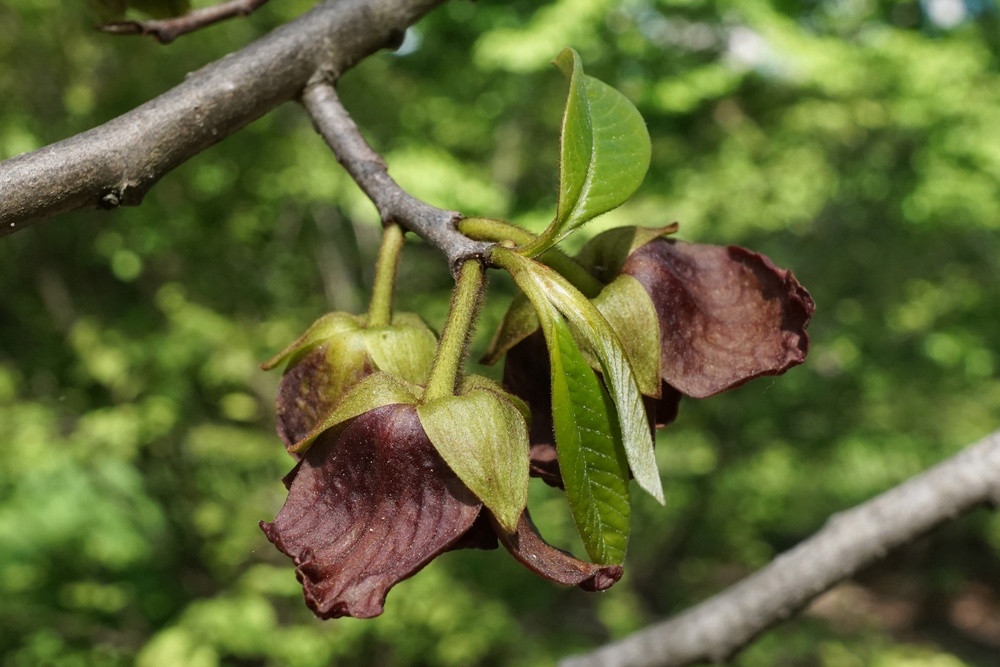 foto: Plant Image Library, https://www.flickr.com/photos/138014579@N08/33931021973
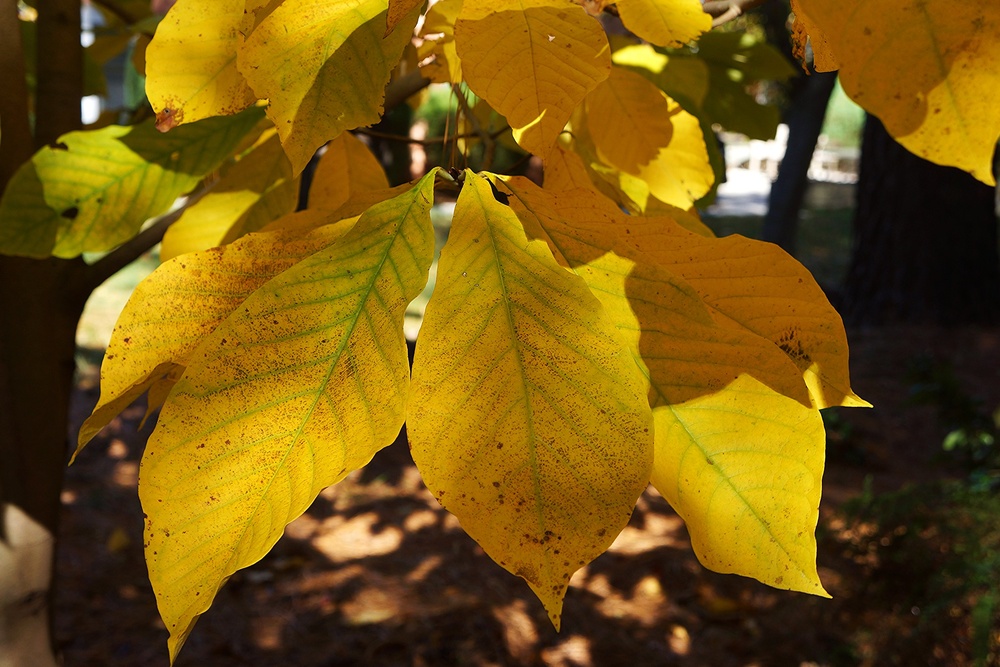 foto: John Winder, https://www.flickr.com/photos/83833206@N00/30870928121
Growth factors
- Frost (whole plant)
-
very strong frost
 cold frost
 mild frost
 light frost
 no frost
- Frost (flowers)
-
very strong frost
cold frost
mild frost
light frost
no frost
- Light
-
full sun
 light shade
 half shade
 fairly deep shade
 deep shade
- Wind
-
strong sea wind
 strong wind
 some wind
 sheltered
 very sheltered
- Soil texture
-
sand
 loam
loam light clay
 heavy clay
 peat
peat
- Soil moisture
-
inundation
 wet
wet moist
moist dry
dry drought
- Groundwater level
-
very low
 low
low medium
 high
high very high
- Soil acidity
-
very acid
 acid
acid slightly acid
 neutral
 alkaline
- Soil fertility
-
very rich
 rich
rich average
 poor
poor very poor
Flowering and pollination
- Flowering period (peak)
- early april, mid april, end of april, end of may
- Flowering period (length)
- several weeks
- Pollination vector
- insects
- Plant reproductive fertility
- self sterile
Life Span and Plant Health
Disease susceptibility
very resistantMain serious pests and diseases
fungal diseases: mildew, brown rotHarvest and Consumption
Fruits
- Harvest location edible part
- High, but within reach
- Harvesting period - start
- Early september, mid september, end of september
- Harvesting period - length
- Month
- Harvesting period - recognition
- Easy, hardness
- Harvesting period - uniformity
- Low
- Suitable harvesting methods
- Hand
- Form of consumption
- Fresh, processed
- Natural storability
- Several weeks
- Suitable markets
- Niche
- Productive life span - start (year) - minimum
- 7
- Productive life span - start (year) - maximum
- 2
- Productive life span - peak (year) - minimum
- 30