

Castanea sativa
Tamme kastanje / Sweet chestnut, European chestnut
Fagaceae (Napjesdragersfamilie)Africa (north), Asia (west), Europe (south)
Edible plant part (1)
Nuts
Read 'form of consumption' for safe preparation methods
Toxic plant part (1)
None
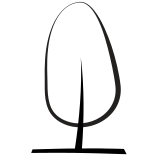
Sweet chestnut, European chestnut belongs to the small trees-large shrubs in the food forest. In the process of ecological succession it is a mid and late species. The growth rate is medium. Fully grown the plant has an average height of 7 to 35 meter and a width of 5 to 20 meter.
The foliage (or leaf cover) is dense. The Sweet chestnut, European chestnut is decidious. It buds in april and it loses its leaves in november.
This species forms a heart-shaped root system. This species is slightly spreading in the food forest.
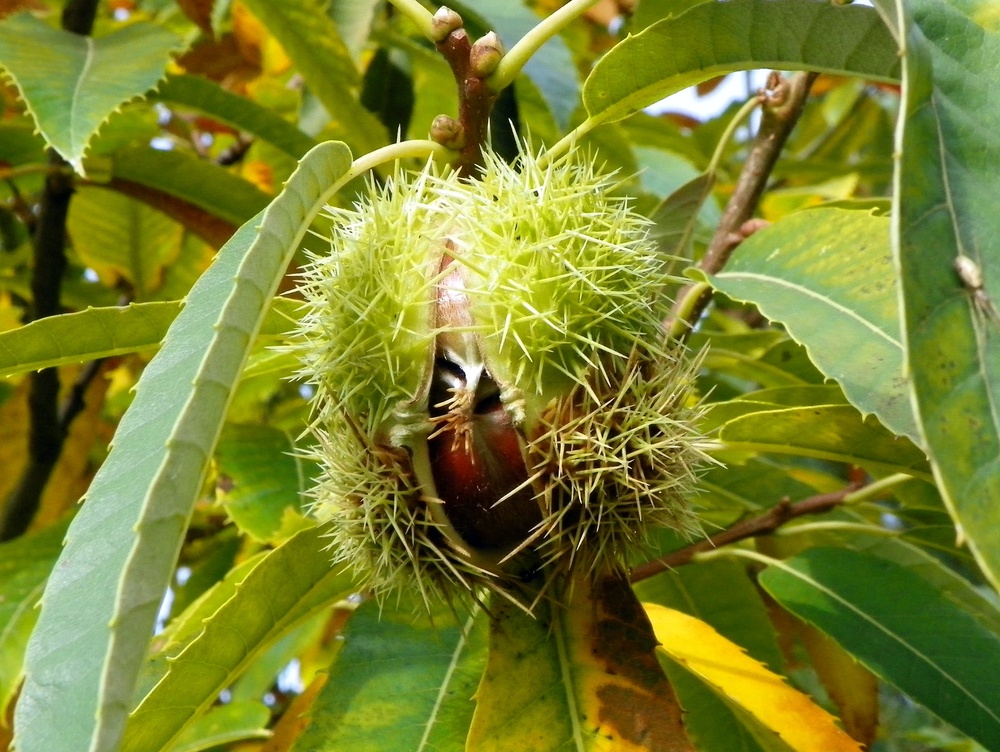 foto: Peter O'Connor, https://www.flickr.com/photos/anemoneprojectors/26158859146
foto: Peter O'Connor, https://www.flickr.com/photos/anemoneprojectors/26158859146
foto: Peter O'Connor, https://www.flickr.com/photos/anemoneprojectors/26158859146
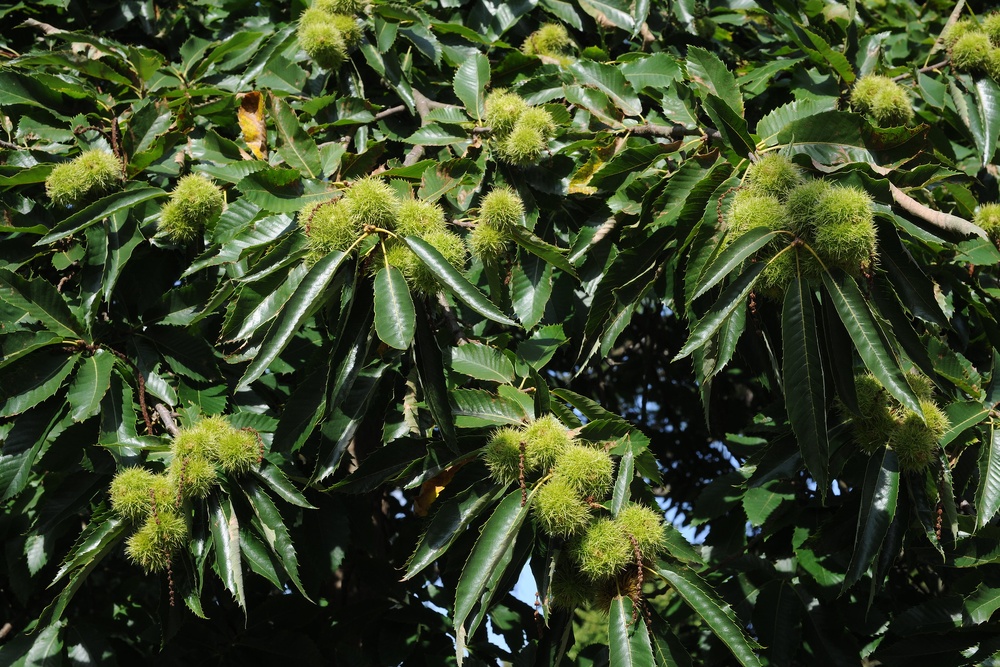 foto: Joost J. Bakker, https://www.flickr.com/photos/194951624@N02/52376978028
Growth factors
- Frost (whole plant)
-
very strong frost
 cold frost
 mild frost
 light frost
 no frost
- Frost (flowers)
-
very strong frost
cold frost
mild frost
light frost
no frost
- Light
-
full sun
 light shade
 half shade
 fairly deep shade
 deep shade
- Wind
-
strong sea wind
 strong wind
 some wind
 sheltered
 very sheltered
- Soil texture
-
sand
 loam
loam light clay
 heavy clay
 peat
peat
- Soil moisture
-
inundation
 wet
wet moist
moist dry
dry drought
- Groundwater level
-
very low
 low
low medium
 high
high very high
- Soil acidity
-
very acid
 acid
acid slightly acid
 neutral
 alkaline
- Soil fertility
-
very rich
 rich
rich average
 poor
poor very poor
Flowering and pollination
- Flowering period (peak)
- mid june, end of june, end of july
- Flowering period (length)
- month, several weeks
- Pollination vector
- insects, wind
- Plant reproductive fertility
- self sterile, sf, more harvest with cross-pollination
Life Span and Plant Health
Disease susceptibility
sensitiveMain serious pests and diseases
chestnut blight, ink disease, chestnut weevil, gnomoniopsis castanea, gall waspHarvest and Consumption
Nuts
- Harvest location edible part
- Ground layer
- Harvesting period - start
- Mid september, end of september, early october, mid october
- Harvesting period - length
- Month, several months, several weeks
- Harvesting period - uniformity
- Low
- Suitable harvesting methods
- Hand, mechanical
- Form of consumption
- Fresh, processed
- Natural storability
- Several days, several months, several weeks, varies per cultivar, week
- Suitable markets
- Bulk, niche
- Productive life span - start (year) - minimum
- 3
- Productive life span - start (year) - minimum
- 3
- Productive life span - start (year) - minimum
- 10
- Productive life span - start (year) - maximum
- 4
- Productive life span - start (year) - maximum
- 4
- Productive life span - peak (year) - minimum
- 15
- Productive life span - peak (year) - minimum
- 15
- Productive life span - peak (year) - minimum
- 30
- Productive life span - peak (year) - maximum
- 20
- Productive life span - peak (year) - maximum
- 20
- Productive life span - peak (year) - maximum
- 80
- Productivity - start (kg) - minimum
- 2
- Productivity - start (kg) - minimum
- 5
- Productivity - start (kg) - maximum
- 4
- Productivity - start (kg) - maximum
- 8
- Productivity - peak (kg) - maximum
- 37.5
- Productivity - peak (kg) - maximum
- 37.5