

Prunus cerasifera
Kerspruim / Cherryplum
Rosaceae (Rozenfamilie)Asia (whole)
Edible plant part (1)
Fruits
Read 'form of consumption' for safe preparation methods
Toxic plant part (1)
Seeds
Cherryplum belongs to the small trees-large shrubs in the food forest. In the process of ecological succession it is a mid species. The growth rate is fast. Fully grown the plant has an average height of 3 to 6 meter and a width of 3.5 to 4.5 meter.
The foliage (or leaf cover) is dense. The Cherryplum is decidious. It buds in april and it loses its leaves in november.
This species forms a heart-shaped medium deep root system. This species is non spreading in the food forest. Cherryplum is no nitrogen fixer.
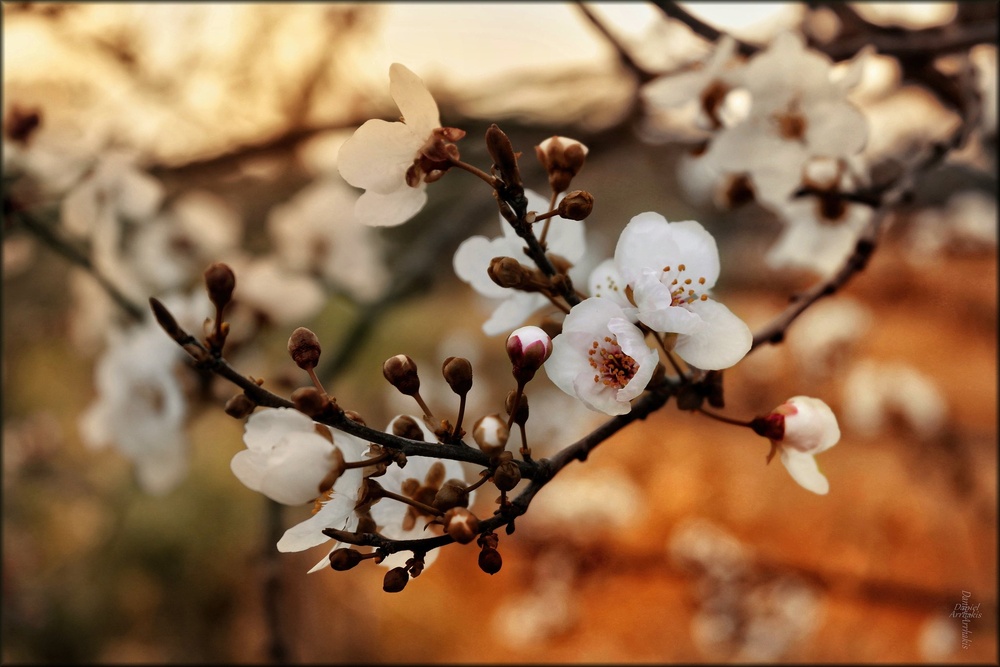 foto: Daniel Arrhakis, https://www.flickr.com/photos/arrhakis/26624939105
foto: Daniel Arrhakis, https://www.flickr.com/photos/arrhakis/26624939105
foto: Daniel Arrhakis, https://www.flickr.com/photos/arrhakis/26624939105
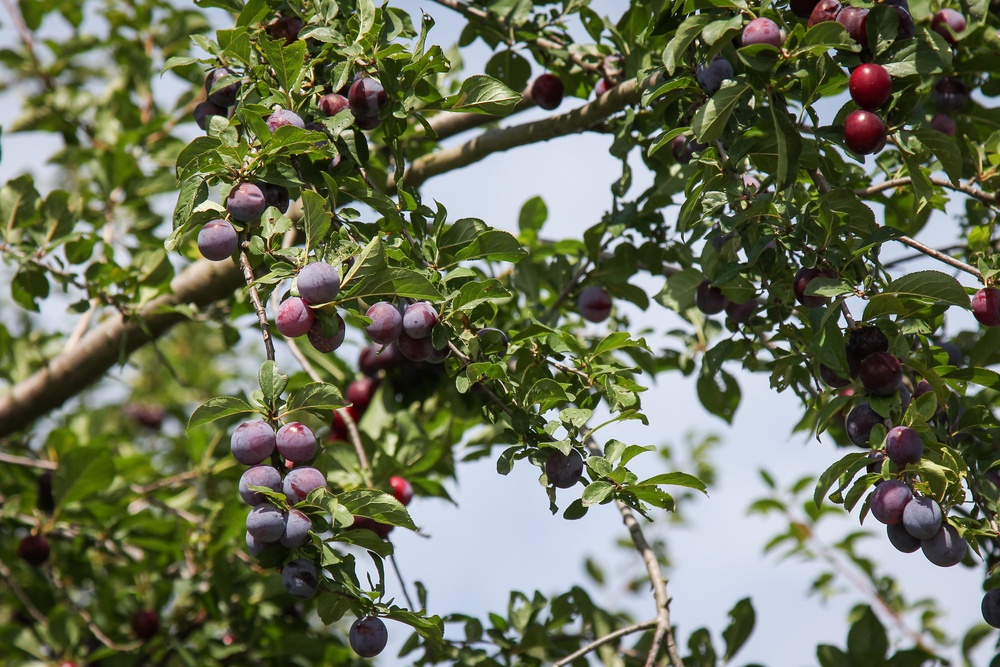 foto: Maja Dumat, https://www.flickr.com/photos/blumenbiene/30506360406
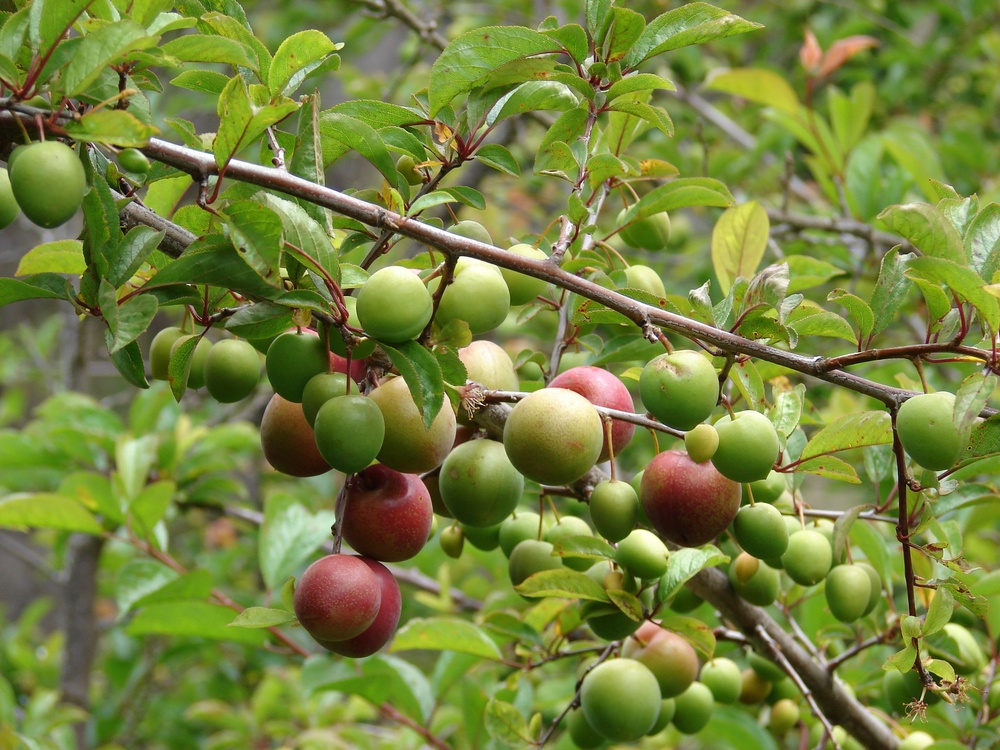 foto: Forest and Kim Starr, https://www.flickr.com/photos/starr-environmental/24587209969
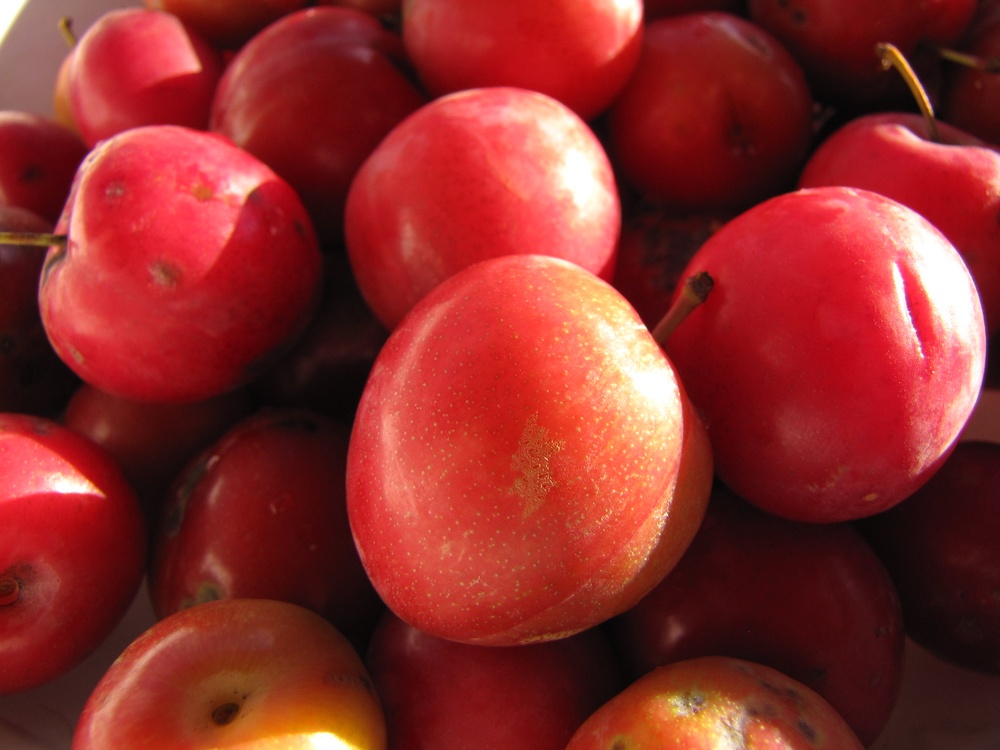 foto: Forest and Kim Starr, https://www.flickr.com/photos/starr-environmental/24747533610/
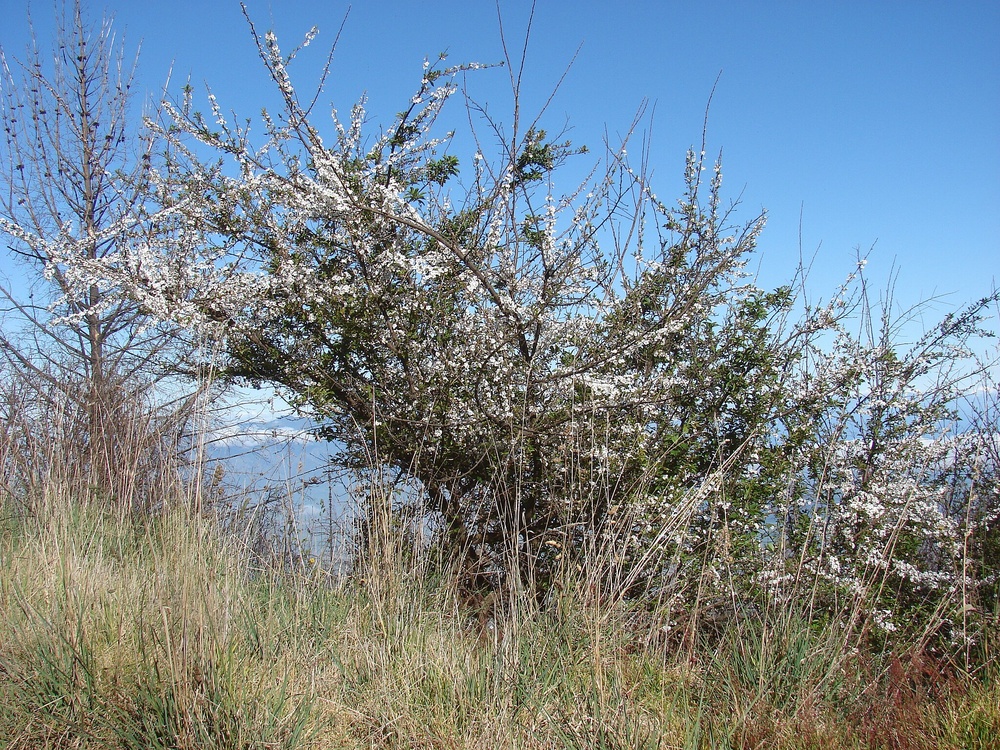 foto: Forest and Kim Starr, https://commons.wikimedia.org/wiki/File:Starr_080301-3096_Prunus_cerasifera_x_salicina.jpg
Growth factors
- Frost (whole plant)
-
very strong frost
 cold frost
 mild frost
 light frost
 no frost
- Frost (flowers)
-
very strong frost
cold frost
mild frost
light frost
no frost
- Light
-
full sun
 light shade
 half shade
 fairly deep shade
 deep shade
- Wind
-
strong sea wind
 strong wind
 some wind
 sheltered
 very sheltered
- Soil texture
-
sand
 loam
loam light clay
 heavy clay
 peat
peat
- Soil moisture
-
inundation
 wet
wet moist
moist dry
dry drought
- Groundwater level
-
very low
 low
low medium
 high
high very high
- Soil acidity
-
very acid
 acid
acid slightly acid
 neutral
 alkaline
- Soil fertility
-
very rich
 rich
rich average
 poor
poor very poor
Flowering and pollination
- Flowering period (peak)
- end of march
- Flowering period (length)
- several weeks
- Pollination vector
- insects
- Plant reproductive fertility
- self sterile
Life Span and Plant Health
Disease susceptibility
sensitiveMain serious pests and diseases
canker, monilinia, leaf curl diseaseHarvest and Consumption
Fruits
- Harvest location edible part
- Above reach, high, but within reach
- Harvesting period - start
- End of june, early july, mid july, end of july
- Harvesting period - length
- Several months
- Harvesting period - uniformity
- Medium
- Suitable harvesting methods
- Hand
- Form of consumption
- Fresh, processed
- Natural storability
- Several weeks
- Suitable markets
- Bulk, niche
- Productive life span - start (year) - minimum
- 5
- Productive life span - peak (year) - minimum
- 15
- Productive life span - peak (year) - maximum
- 25
- Productive life span - end (year) - maximum
- 30